_forumlogo.png.a607ef20a6e0c299ab2aa6443aa1f32e.png)


Kevin Bresnahan
-
Posts
8,663 -
Joined
-
Last visited
Recent Profile Visitors
20,843 profile views





Kevin Bresnahan's Achievements

Veteran (13/14)
-
 Rare
Rare
-
 Rare
Rare
-

-
 Rare
Rare
-
 Rare
Rare
Recent Badges
-
One of the last products I worked on was a "beam former". These beasts are used in 5G type communication systems. They typically work with 4 signals simultaneously, which is how you get so much data with 5G. A simplified block diagram doesn't even do it justice. Mounting these devices onto a board is a bear too. Each solder connection has to work at all 8 RF ports across the whole frequency band over the entire temp range. Not as easy as it sounds. Board assembly was a huge part of my days at Analog Devices, as getting these parts soldered down perfectly every time was ultra-important to our customers. The last one of these I worked on came in a bumped package i.e. little solder balls in the bottom. The biggest problem with them was that they curl a bit under solder heat temps (~260 degrees C) and sometimes, the little solder balls don't make good connections if the curl is too great.
-
When I decided to retire, I took a few pictures of my last work areas. I was an applications engineer for Analog Devices' RF products group. I tested parts from MHz to 100 GHz. Here was one of my last test benches, but I don't think the product was mine. By this time, I was responsible for beam forming products. This looks like a GaN ampllifer - you can tell by the monster capacitor on the test board. Those things needed to be pulsed and the drew a ton of current, so you needed a massive cap to be able to supply that current quickly. It was probably this 1-22 GHz amp: https://www.analog.com/en/products/adpa1112.html The labs I worked in typically had 50 or 60 test benches like this. Here is one "chase" with about 10 test benches/racks in it. The floor is conductive (as are the chairs) for ESD purposes. You can see a temp chamber on the left. We used to have to characterize our parts from -40 degrees to +85 degrees Celsius. The plexiglass box/cover is there because we had to pump in Nitrogen to prevent frost/freezing. This was one of our workhorses in the test lab. As you can see if you can zoom in, this box could test from 2 Hz to 110 GHz with extraordinary dynamic range. Cabling was extremely important with these test boxes. Some of our cables cost upwards of $12,000 each. My understanding of using cables capable of cleanly transmitting high frequency signals is why is am a bit biased against a lot of the audio cable debates... audio (Hz to maybe 16 kHz if you're lucky) is a piece of cake to conduct compared to the signals I used to have to worry about. BTW - I took this picture to show to the Keysight rep. Those calibration stickers have to be redone every year in a special cal lab.
-
I was way more into rock bands when Miles last toured and I was a kid when Coltrane died. My parents didn't even have any Brubeck LPs, much less Coltrane. We used to sing along with Mitch Miller.
-
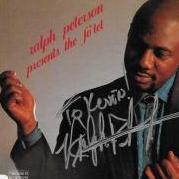
I haven't played it in a while, but I used to play this quite often:
-
"From Pittsburgh George's Collection..."
Kevin Bresnahan replied to rostasi's topic in The Vinyl Frontier
It doesn't really matter at this point as most of the LPs I was talking about have already been bought, so some thought it was worth the gamble. -
"From Pittsburgh George's Collection..."
Kevin Bresnahan replied to rostasi's topic in The Vinyl Frontier
I get that a sealed vintage record is an unknown LP. I also get that discogs doesn't allow you to post a record for sale unless you link it to one of the LPs released. But when the LP is listed with specifics like Van Gelder in the dead wax, then it's just not right. For instance, they're selling this: https://www.discogs.com/shop/item/4135184193 Clicking the "View Release" button brings you to an LP described as having: Matrix / Runout (Side A runout): BST-84058-A LW RVG STEREO Matrix / Runout (Side B runout): BST-84058-B · LW RVG STEREO If this were the actual record inside that sealed jacket, it would be a good deal at $90. But when you open and find that it's not a Van Gelder cut, can you return it? Unlikely. Stereo Jack's used to sell vintage sealed records for pretty cheap for this reason. I bought quite a few of them over the years and I never lucked into a Van Gelder Blue Note LP. It's like buying sealed packs of baseball cards and hoping it contains a rare card. -
"From Pittsburgh George's Collection..."
Kevin Bresnahan replied to rostasi's topic in The Vinyl Frontier
I don't get how they can list a sealed record with absolute certainty of what is inside of the shrinkwrap. There are a couple of sealed Blue Note records with cut corners and the release page lists particulars you could not know unless the record was opened. -
What a great CD! I asked Christian what it was like playing with these two masters and he was almost speechless. He thanked me for reminding him of it. I cringe when I think about how much I had to pay to get this CD. I think it was close to $40 with the shipping.
-
I was never into Zappa. I suppose it's never too late though. Kinda sad that he didn't take Frank's warnings about prostate cancer to heart. Prostate cancer is one of those cancers that is beatable if caught early enough. Frank was very vocal about how his doctors missed it.
-
I am very fond of Lou's "Blues Walk". I am really glad that i got to see Lou so many times before he retired. He had a great stage presence, even if he repeated a lot of the same stories year after year. That said, I do appreciate the earlier Clifford Brown & Art Blakey dates too. Lou did too. He was not bashful about it.
-
Back then, so did I. I also took this out-of-focus picture of the Mosaic office. It was so tiny.
-
Thelonious Monk Live in Paris 1967, V. 1
Kevin Bresnahan replied to ghost of miles's topic in New Releases
"First official release from the Monk estate"? What about: Released by the Monk estate in 2002? https://www.discogs.com/release/7786257-Thelonious-Live-In-Paris-Vol-3 -
I was going through some old digital photo albums for my wife's Aura picture frame when I came upon some pictures from a visit to Mosaic Records in 2003. I had totally forgotten that my friend Rob took a picture of me and Michael Cuscuna.
-
3 Saville Row, London - see you at the rooftop
Kevin Bresnahan replied to gvopedz's topic in Miscellaneous - Non-Political
'Bout time! I couldn't believe their attitude when I was there. The person "guarding" the door back then was pretty adamant that they were only a recording studio. The attitude gave the impression that they wished that Abbey Road wasn't even recorded there... as if they would have still been in business if they hadn't done it. -
The thing about Jimmy Scott that always catches me off guard when I hear him on the radio is that I almost always wonder what female singer is singing until I see his name pop up on the display. He sings in such a high register for a male singer it's uncanny how close he comes to the pitch of many female singers.