_forumlogo.png.a607ef20a6e0c299ab2aa6443aa1f32e.png)

Rabshakeh
-
Posts
7,692 -
Joined
-
Last visited
Content Type
Profiles
Forums
Events
Blogs
Everything posted by Rabshakeh
-
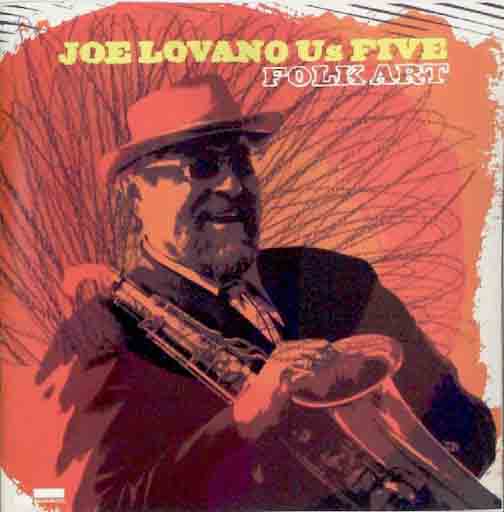
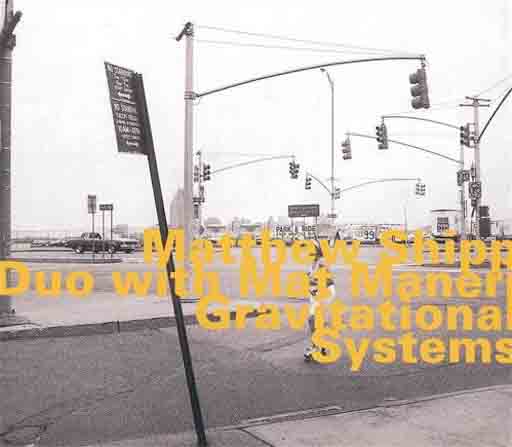
Joe Lovano Us Five - Folk Art (Blue Note, 2009) I rarely have an itch to listen to Lovano these days, but I still think this one has stood the test of time fairly well. Now playing: Gravitational Systems (Hatology, 2000) by Matthew Shipp and Mat Manieri. This is one of my favourite Shipps from the era, two decades ago, when I was first getting into jazz. His harmonic interplay with Maneri is particularly excellent.
-
That looks like a good one. I’ll check it out.
-
The Nabatov and Seabrook one is very good.
-
I will pass on your regards. Breaking up the journey because, midway through the organ solo on "Favours" off Dr. Lonnie Smith's Afro-Desia, the three year old suddenly uncovered the fountain of youth, so to speak. It's going to be a long drive...
-
Driving down to Devon for a "sunny" family "holiday". First up: Accent on Africa by the Cannonball Adderley "Quintet" Now playing: Azymuth's Light As A Feather


-
Agreed. I always felt it was pretty silly, although presumably an imaginative reaction to seeing supermarket jazz sections stocked entirely by Kenny G CDs.
-
Smooth jazz saxophone definitely seems to be something that exists independently of the genres's emergance as a radio format. I hear a lot.of smooth jazz in some Pharaoh Sanders records.
-
I find my reissue LP copy of Tauhid is very muddy when compared to the digital or CD versions. Sonny Sharrock is submerged complely. How does the original compare?
-
Thanks!
-
I loved the concentration on what was commercially a hit in the community as the key metric of success. It helped cut through the general critical noise we all take for granted.
-
A very old (but interesting) thread. Alexander Hawkins brings up an interesting point at a tangent to the main discussion at the end, regarding John Butcher being influenced by gospel saxophone playing. This is news to me. But interesting news. If anyone knows anything about this, I’d be fascinated to know (including the names that escaped the poster back in 2006).
-

Baraka / Kofsky on AACM
Rabshakeh replied to Rabshakeh's topic in Jazz In Print - Periodicals, Books, Newspapers, etc...
That's a great post. Answers my question and more. Thanks so much. -
Don't knock the turtle neck. That's how you know the compositions are serious. And you're right. It is Ghost Trance, not Ghost Dance. Ghost Dance is a great Prince Buster tune. Ghost Trance was a particularly turgid era of Braxton.
-
That's very sad. I finished his Soul Jazz book last month and enjoyed it, as I have enjoyed many albums he produced over the years.
-
They've taken the obvious ones from the 70s. The catchier ones. It's not ghost dance stuff, I promise. Oh yes. I cannot wait for the return of live music. I am kicking myself for every gig I didn't attend.
-
Baraka / Kofsky on AACM
Rabshakeh replied to Rabshakeh's topic in Jazz In Print - Periodicals, Books, Newspapers, etc...
I think you've hit upon the background to the query. Regardless of their faults, Baraka and Kofsky were fairly instrumental in forming the (friendly, supporters') narrative regarding the "freedom music" of the 60s "New Thing". Their views on what was and wasn't happening or important still shape how people talk about the scene even now. I think that there's a fairly well rehearsed critical viewpoint that their coverage was responsible for a certain image of free jazz which places greater emphasis on radical self expression in comparison to radical composition. There are already some threads on this forum which have covered the question of whether Baraka's and Kofsky's views had an impact on the careers of those musicians that did not conform to this narrative, such as Bill Dixon, who was definitely in the radical composition camp. I'm not 100% sure on this, given that Baraka and Kaufsky were both pretty sweet on Sun Ra who presumably falls into that camp too. But what I have never seen is how Baraka in particular responded to the rise of Anthony Braxton, Roscoe Mitchell, Leo Smith, Leroy Jenkins and the rest. Those are artists who certainly don't fit the fire music mould, and are steeped in compositional ideas and strategies. This seems strange given that both critics were presumably still at the height of their prestige at the point that the AACM artists were making a splash in the early 70s in NY. -
Nice one!.
-
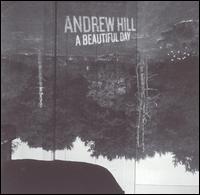
Andrew Hill’s A Beautiful Day Surely one of the best big band records of the last thirty years. Now playing: Ibsen’s Ghosts by Joe McPhee. I love his and Jen Bishop’s fat tones on this record. Much gutsier than the competition.

-
Those Bruised records are really something.
-
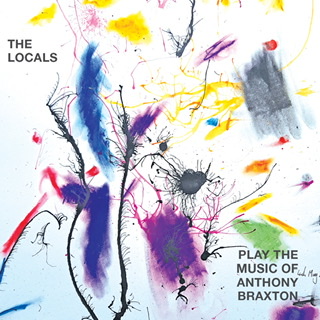
I’ve finally gotten round to listening to this one. I really recommend it. A very fresh take on Braxton that sounds equally influenced by Ornette Coleman’s electric funk stage.
-
Baraka / Kofsky on AACM
Rabshakeh replied to Rabshakeh's topic in Jazz In Print - Periodicals, Books, Newspapers, etc...
That’s probably it. He doesn’t like Joe McPhee either, for some equally nebulous reason about his music not having “soul” or something. -
Baraka / Kofsky on AACM
Rabshakeh replied to Rabshakeh's topic in Jazz In Print - Periodicals, Books, Newspapers, etc...
No. You're right. I am not Amiri Baraka. If I was, I would probably know my views on the AACM. -
Baraka / Kofsky on AACM
Rabshakeh replied to Rabshakeh's topic in Jazz In Print - Periodicals, Books, Newspapers, etc...
What do you mean? I love those records. -
Do you have a link to the interview?
-
Baraka / Kofsky on AACM
Rabshakeh replied to Rabshakeh's topic in Jazz In Print - Periodicals, Books, Newspapers, etc...
I'm not sure of the source, but I recall that Baraka didn't rate Die Like A Dog at all.